Samorost 3: Cosmic puzzle-adventure in hand-crafted visuals
Samorost 3 from Amanita Design is a Windows adventure about a curious space gnome tracing a fallen object across the cosmos. Players move through short, scene-based locations and solve environmental puzzles that advance the plot without traditional text. The title presents a standalone continuation of the studio's earlier indie work, framed as an art-first experience focused on discovery. Fans of point-and-click puzzles and visual storytelling get the most mileage here.
What kind of game is Samorost?
So, you step into a tiny, surreal universe where a gnome finds a magic flute and cobbles a small ship to hunt its origin. The core loop pairs point-and-click exploration with environmental puzzles that use the flute to trigger interactions and alter devices. Progress is driven by observation and experimentation within short scenes rather than by explicit textual objectives, making discovery the primary engine.
What does the game look and sound like?
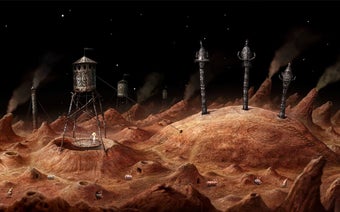
Thus, the presentation leans on intricate, hand-crafted 2D artwork blended with high-resolution textures, producing surreal tableaux that echo Czech and Russian animation traditions. The soundtrack by Floex and organic sound effects are woven into puzzle moments, so audio cues often double as mechanical hints. Cursor-based interactions keep the interface minimal, and animation quality supplies much of the communicative clarity players need.
Is it hard to get started?
Some aspects demand patient inspection, but the game includes an illustrated sketchbook that gives visual hints for specific puzzles. Progression moves scene-to-scene rather than through unlock trees or levels. On PC the minimum specifications are modest, listing a 2.3 GHz dual-core CPU, 1 GB RAM, Intel HD 4000 graphics, and about 1 GB storage, which keeps basic hardware requirements low.
Samorost is a patient, art-led pick for observant puzzle players
Samorost earns Very Positive user reception for its presentation and sound, so many players respond well to its approach, but feedback also notes that some puzzles are abstract or unclear, which can frustrate those who prefer explicit guidance. Choose this title if you enjoy short, scene-based challenges and careful observation; avoid it if you need step-by-step instruction. The experience rewards patience and attention rather than repetitive trial-and-error play.